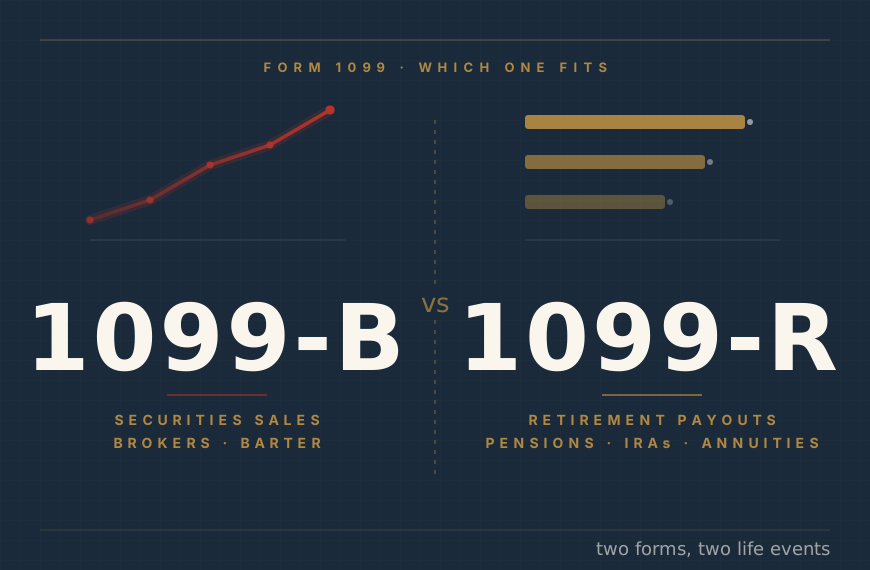
If you are unsure whether to issue Form 1099-B or Form 1099-R, you are not alone. These forms report very different transactions—investment sales versus retirement distributions—and choosing the right one matters for accurate filing, avoiding penalties, and helping recipients prepare correct tax returns.
In this guide, you will learn what each form reports, who must file, key deadlines, common examples, and practical steps to avoid mistakes. If you need broader help with 1099 forms, BoomTax can help streamline filing and reporting.
At a Glance: 1099-B vs 1099-R
- Form 1099-B: Issued by brokers and barter exchanges to report proceeds from sales of stocks, bonds, mutual funds, options, commodities, certain debt instruments, and barter transactions. It includes cost basis and gain/loss details for covered securities.
- Form 1099-R: Issued by plan administrators, custodians, and insurers to report distributions from pensions, annuities, retirement or profit-sharing plans, IRAs, and insurance contracts. It includes distribution codes and withholding.
The phrase “1099-B vs 1099-R” comes down to one question: Did you report a sale of investments, or did you distribute money from a retirement-related account?
What Form 1099-B Reports
Form 1099-B reports gross proceeds from brokered sales or redemptions and certain barter exchange transactions. For covered securities, brokers also report cost basis, whether the gain or loss is short-term or long-term, and adjustments such as wash-sale disallowed losses.
You can review the IRS overview here: About Form 1099-B.
Common items reported on 1099-B
- Gross proceeds from sales or redemptions.
- Cost basis and basis adjustments for covered securities.
- Type of gain or loss, such as short-term or long-term.
- Wash-sale amounts disallowed.
- Federal income tax withheld, including backup withholding if any.
There is generally no minimum dollar threshold for brokers to issue a 1099-B for sales. Barter exchanges must report transactions regardless of amount.
What Form 1099-R Reports
Form 1099-R reports distributions of $10 or more from retirement plans and certain insurance contracts. It shows the gross distribution, taxable amount if known, the amount of federal and state tax withheld, and a distribution code indicating the type of payout.
For the IRS overview, see About Form 1099-R.
Common items reported on 1099-R
- Gross distribution and taxable amount.
- Federal and state income tax withholding.
- Employee contributions or insurance premiums, if applicable.
- Distribution code or codes indicating the nature of the payout, such as early, normal, disability, or rollover.
Issuers include plan administrators, IRA custodians, insurance companies, and trustees of pensions and annuities.
Key Differences That Drive Your Choice
- Nature of transaction:
- Sale of securities or barter exchange? Use 1099-B.
- Distribution from a retirement plan, IRA, annuity, or insurance contract? Use 1099-R.
- Thresholds:
- 1099-B: Generally no minimum for brokered sales; barter exchanges report all transactions.
- 1099-R: Required for distributions of $10 or more.
- Tax posture:
- 1099-B supports capital gain/loss reporting on Schedule D/Form 8949.
- 1099-R informs ordinary income reporting and possible early distribution penalties on Form 1040 and Form 5329.
- Additional coding:
- 1099-B includes basis, holding period, and wash-sale adjustments for covered securities.
- 1099-R uses Box 7 distribution codes, such as 1 for early, 7 for normal, and G for direct rollover, to identify the type of payout.
When comparing 1099-B vs 1099-R, ask yourself: Did you sell an investment, or did you distribute money from a retirement or annuity account? That answer determines the form.
Who Must File Each Form
1099-B filers
- Brokerage firms, clearing firms, and introducing brokers.
- Barter exchanges.
- Some platforms facilitating sales of securities or certain contracts.
1099-R filers
- Plan administrators and trustees of qualified plans and 403(b) or 457 plans.
- IRA custodians, including traditional, Roth, SEP, and SIMPLE IRAs.
- Insurance companies issuing annuity or life insurance contract distributions.
Deadlines, Filing Methods, and Penalties
- Recipient copies:
- 1099-R: Due to recipients by January 31.
- 1099-B: Due to recipients by February 15. Brokers often send a consolidated statement.
- IRS filing:
- Paper filing: Typically due by the end of February.
- Electronic filing: Typically due by March 31.
- E-file threshold: If you file 10 or more information returns in total for the year, across all types combined, you must e-file.
- Penalties: The IRS may assess per-return penalties for late, incorrect, or missing forms. Amounts scale based on how late the filing is and can reach several hundred dollars per return, with higher penalties for intentional disregard.
Deadlines and penalty amounts can change, so check the latest IRS instructions each season. You can also review current filing deadlines, learn more about e-filing, and consult the IRS Instructions for Certain Information Returns.
Practical Examples
Example 1: Stock sale with wash sale
An investor sells 100 shares of XYZ at a loss on December 1 and repurchases the shares 10 days later. The broker issues a 1099-B reporting the sale proceeds, cost basis, and the wash-sale amount disallowed. The recipient will reconcile the transaction on Form 8949/Schedule D.
Example 2: Normal pension payout with withholding
A retiree receives a monthly pension. The plan withholds federal tax and sends payments throughout the year. The administrator issues a 1099-R showing the gross distribution, taxable amount, and federal and state withholding. The retiree reports the income on Form 1040 and claims the withholding as taxes paid.
Example 3: Direct rollover from 401(k) to IRA
An employee moves her 401(k) directly to a traditional IRA. The plan issues a 1099-R with a “G” code for direct rollover. The taxable amount is generally zero, but the form must still be filed to document the transaction. The receiving IRA custodian will typically file Form 5498 to report the rollover contribution.
Example 4: Early IRA distribution
A 45-year-old withdraws funds from a traditional IRA. The custodian issues a 1099-R with code “1” for early distribution, no known exception, and reports withholding if any. The taxpayer may owe additional tax on early withdrawals unless an exception applies, reported on Form 5329.
Actionable Tips to Avoid Errors
- Match the form to the transaction: sales go on 1099-B; retirement payouts go on 1099-R.
- Collect accurate recipient data: request Form W-9 and use TIN Matching to reduce backup withholding and mismatch notices.
- Confirm cost basis: make sure basis for covered securities is correct and that wash-sale adjustments are applied when required.
- Choose the right 1099-R distribution code: review plan records for early, normal, disability, death, rollover, or Roth-related codes.
- Track withholding: report federal and state withholding in the correct boxes and reconcile payroll or tax deposits.
- Mind the deadlines: send recipient copies on time, e-file by the IRS due date, and issue corrected forms promptly if errors are found.
- Coordinate across accounts: when accounts transfer between brokers or custodians, verify that basis and holding periods transfer properly.
- Document rollovers and conversions: keep records for direct rollovers, 60-day rollovers, and Roth conversions to support coding and taxable amount determinations.
Common Misconceptions
- “No cash, no form.” False. Even a non-taxable direct rollover requires a 1099-R with the appropriate code.
- “Small sale amounts don’t need 1099-B.” Generally false. Brokers typically must report sales regardless of amount.
- “Brokers compute the investor’s tax.” False. Brokers report proceeds, basis for covered securities, and adjustments. The investor still determines final gain or loss on Form 8949/Schedule D.
- “The payer decides early-withdrawal penalties.” Not exactly. Payers use distribution codes on 1099-R, but the taxpayer calculates any additional tax on Form 5329, considering exceptions.
Special Considerations
- Covered vs. noncovered securities: Basis for covered securities is reported on 1099-B. For noncovered securities, the broker may not report basis, and the investor provides it when filing.
- Consolidated 1099s: Brokers often send a combined statement with 1099-B, 1099-DIV, and 1099-INT details. Corrections can follow later in the season.
- State reporting: Some states require separate filing or combined e-filing, so check local rules.
- Digital assets: Reporting rules are evolving. Some platforms may issue 1099-B-like statements, but new IRS forms and regulations may apply in future years. Monitor IRS guidance for current requirements.
Step-by-Step: Choosing 1099-B vs 1099-R
- Identify the transaction:
- Sale or redemption of securities, or barter exchange → 1099-B.
- Distribution from a retirement plan, IRA, annuity, or insurance contract → 1099-R.
- Gather recipient information: legal name, address, TIN, and account details.
- Compile transaction data:
- For 1099-B: trade dates, proceeds, cost basis, holding period, wash-sale adjustments, and withholding.
- For 1099-R: gross distribution, taxable amount if known, employee contributions, withholding, and distribution code.
- Validate data: cross-check records, apply coding rules, and confirm withholding totals.
- Furnish recipient statements by the due date and file with the IRS, e-filing if you are over the threshold.
- Monitor for corrections: issue corrected forms promptly if you discover errors.
Keeping a short checklist handy can streamline decisions every time the 1099-B vs 1099-R question comes up.
Frequently Asked Questions
Do rollovers require a 1099-R even if non-taxable?
Yes. Direct rollovers are reported on 1099-R with a rollover code such as code G. While they are typically non-taxable, the IRS still requires reporting.
What form do I use for an annuity payout?
Use 1099-R for annuity distributions, including periodic payments and lump sums, whether from qualified plans or nonqualified contracts.
How do investors use 1099-B and 1099-R?
Investors use 1099-B to complete Form 8949/Schedule D for capital gains and losses. They use 1099-R to report retirement income on Form 1040 and compute any additional tax on early distributions on Form 5329.
What if cost basis is missing on 1099-B?
That can happen with noncovered securities. The taxpayer is responsible for providing basis on their return, while payers should report basis for covered securities when available.
Bottom Line
Form selection hinges on the transaction’s nature: sales activity goes on 1099-B, while retirement and annuity payouts go on 1099-R. Understand the thresholds, deadlines, and coding rules, and maintain accurate records.
Taking a systematic approach reduces errors, helps prevent penalties, and makes it easier for recipients to file correct returns whenever the 1099-B vs 1099-R question arises.
If you need help filing, correcting, or electronically submitting information returns, BoomTax can help you manage the process from start to finish. Explore BoomTax solutions for 1099 forms, review 1099 corrections, and simplify your e-filing process with BoomTax.
BoomTax, The Boom Post, and its affiliates do not provide tax, legal or accounting advice. This material has been prepared for informational purposes only, and is not intended to provide, and should not be relied on for, tax, legal or accounting advice. You should consult your own tax, legal and accounting advisors prior to engaging in any transaction.
About Author