If you paid freelancers, issued rent payments, processed prize awards, or handled other reportable payments last year, there’s a good chance you need to file a 1099. This guide walks you through what 1099s are, who must file, which form to choose, how to meet deadlines, and how to e-file correctly so you can move from unsure to confident.
If you’re new to information returns, start with BoomTax’s overview of 1099 forms to get familiar with the broader filing landscape.
What Is a 1099 and Why It Matters
A 1099 is an information return that reports certain payments made outside of traditional wages, which are reported on Form W-2. The payer sends the form to the recipient and to the IRS.
Recipients use it to prepare their tax returns, and the IRS uses it to match income. Filing correctly helps you avoid penalties and helps recipients report accurate income.
Who Must File a 1099?
Generally, businesses, nonprofits, estates, trusts, and certain other payers must file 1099s when they make reportable payments in the course of their trade or business. Common examples include the following:
- Paying $600 or more to an independent contractor for services.
- Paying rents, royalties, prizes or awards, or certain legal payments.
- Paying interest, dividends, broker transactions, or retirement distributions.
- Processing third-party network or card transactions, which are generally handled by payment platforms.
Personal payments, such as paying a neighbor to mow your lawn for your household, typically do not require a 1099. When in doubt, consult the official IRS instructions for the specific form or a qualified tax professional.
Which 1099 Form Do You Need?
Different 1099 forms report different payment types. Choosing the right one is one of the most important parts of filing accurately.
- Form 1099-NEC: Nonemployee compensation of $600 or more for services, such as payments to independent contractors and freelancers. This includes fees, commissions, and certain professional services.
- Form 1099-MISC: Miscellaneous payments such as rents, royalties, prizes or awards, medical and healthcare payments, crop insurance proceeds, and gross proceeds to attorneys.
- Form 1099-INT: Interest income of $10 or more, and other amounts in certain cases.
- Form 1099-DIV: Dividends and distributions, generally $10 or more.
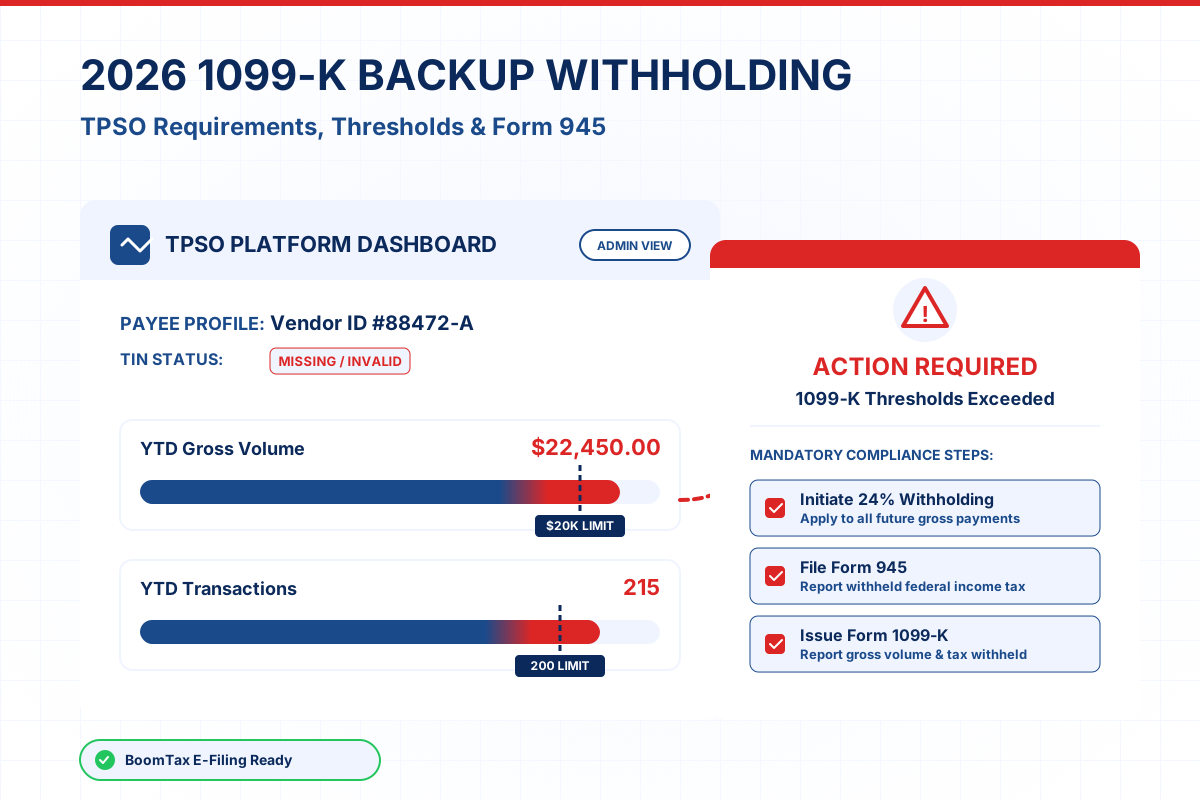
- Form 1099-K: Payment card and third-party network transactions. Thresholds and rollout timelines have been evolving, so check current IRS guidance.
- Form 1099-B: Proceeds from broker and barter exchange transactions.
- Form 1099-R: Distributions from pensions, annuities, retirement or profit-sharing plans, IRAs, and insurance contracts.
- Form 1099-S: Proceeds from real estate transactions.
Thresholds and exceptions vary by form. For example, most 1099-NEC and many 1099-MISC categories use a $600 threshold, while 1099-INT and 1099-DIV commonly use $10.
Always verify the current year’s instructions for the form you’re filing. For a deeper look, see BoomTax’s guides to Form 1099-NEC and Form 1099-MISC.
Quick Decision Checklist: Do You Need to Issue a 1099?
- Was the payment made in the course of your trade or business, not personal?
- Is the payment type reportable, such as services, rents, prizes, certain legal payments, interest, or dividends?
- Does the amount meet the threshold for the specific form, such as $600 for 1099-NEC services?
- Was the recipient an individual, sole proprietor, partnership, LLC taxed as partnership, or certain entities? Some payments to corporations are exempt, but not all. For example, attorney fees and medical or healthcare payments may still be reportable.
- Do you have the recipient’s legal name, address, and TIN, usually collected on Form W-9?
If you answered yes to most of the above, you likely need to file a 1099.
Information You Need Before You File
- Completed Form W-9 from each payee to capture legal name, address, and TIN.
- Payment records by recipient and category, such as services versus rent, for accurate amounts.
- TIN verification, which is optional but recommended. The IRS TIN Matching Program can help reduce errors that lead to notices.
- Your payer details, including legal name, address, EIN, and contact information.
- State reporting needs, since some states require separate filings or accept federal sharing through Combined Federal/State Filing.
If you still need payee information, BoomTax’s W-9 guide can help you collect the right details before filing season gets busy.
How and Where to File
E-file options
- IRS IRIS (Information Returns Intake System): A free IRS platform to e-file Forms 1099. You create an IRS account, follow the on-screen steps, and upload or enter forms. Learn more on the IRS IRIS e-file page.
- Authorized e-file providers: Third-party software or services that prepare, e-file, and often mail recipient copies and handle state filing. Compare features, pricing, TIN matching, and correction workflows.
Paper filing
Paper filing is still allowed for small filers, but the IRS strongly encourages e-filing. If you file on paper, you must use official scannable forms and include Form 1096.
Paper filing also comes with earlier deadlines and a higher risk of errors.
Electronic filing threshold
If you file 10 or more information returns in aggregate for the year, including W-2, 1099, 1095, and others, you generally must e-file. This threshold and aggregation rule apply across form types, so check the latest IRS guidance in case of changes.
State filing
Many states receive 1099 data through the IRS Combined Federal/State Filing program or through e-file providers. Some states require direct filing or have distinct thresholds, so confirm your state’s current rules before you submit.
Deadlines for 2026 You Should Know
Specific due dates can vary by form and filing method. For returns reporting 2025 payments filed in 2026, common timelines are generally as follows:
- Recipient copies: Often due by January 31.
- Form 1099-NEC to the IRS: Typically due by January 31 for both paper and e-file.
- Form 1099-MISC to the IRS: Paper filings are often due by late February, while e-file is due by March 31.
Deadlines, thresholds, and state dates can change. Always verify the current year instructions for Form 1099 for 2026 on the IRS website, and review BoomTax’s 2026 filing deadlines page before you file.
Step-by-Step: Your First 1099 Season
- Collect W-9s early: Request W-9s from contractors and vendors before you pay them. Withhold backup withholding if a valid TIN is not provided.
- Track payments by category: Separate services, rent, legal fees, royalties, prizes, and other payment types. This helps you avoid miscoding boxes later.
- Verify TINs: Use the IRS TIN Matching Program if eligible to reduce mismatches.
- Choose your filing method: Use IRIS or a reputable e-file provider for speed, accuracy, and confirmations.
- Prepare and review: Double-check names, addresses, TINs, amounts, and the correct form and boxes.
- Send recipient copies: Furnish them by the deadline. You may use secure electronic delivery with consent or mail physical copies.
- File with the IRS: E-file by the due date and keep your submission acknowledgments.
- Handle states: Confirm whether your filings are forwarded to your state or whether separate submission is required.
- Retain records: Keep copies of filed forms, W-9s, and proof of filing and furnishing.
Backup Withholding, B-Notices, and Corrections
Backup withholding
If a payee fails to provide a correct TIN or is subject to backup withholding, you must withhold a flat percentage from reportable payments and remit it to the IRS. Be sure to document and report withheld amounts appropriately.
B-notices
If the IRS notifies you of a name and TIN mismatch, you may need to solicit updated information from the payee. Follow the IRS B-notice procedures and timelines carefully to minimize penalties.
Correcting forms
If you discover an error after filing, submit a corrected return. Many 1099 corrections are classified as either amount or box corrections or name or TIN corrections, and e-file systems typically guide you through the correct process.
Always check the specific form’s instructions when making corrections.
Practical Examples
- Freelance designer: You pay a designer $2,000 for a new logo. You collect a W-9, and because the payment is for services and exceeds $600, you file a 1099-NEC and furnish a copy to the designer by January 31.
- Office rent: Your company pays $1,200 per month to an LLC landlord. Generally, rents are reported on 1099-MISC box 1. Verify whether the landlord is exempt, such as if treated as a corporation, and follow the current rules.
- Attorney payments: You pay a law firm $1,500 in gross proceeds related to a settlement. Certain attorney payments are reportable on 1099-MISC box 10, even if the firm is a corporation.
- Interest to a lender: Your business pays $150 in interest to an individual lender. You typically file Form 1099-INT because the amount exceeds $10.
- Payment platform sales: You sell goods through an online marketplace. If you’re the seller, the platform typically handles 1099-K reporting. Thresholds and transition rules can change, so monitor current IRS guidance.
Common Mistakes to Avoid
- Using the wrong form: Services generally go on 1099-NEC, while many other payments belong on 1099-MISC.
- Missing or incorrect TINs: Always collect and verify W-9s, and consider TIN matching.
- Reporting personal payments: 1099s generally apply to business payments, not personal ones.
- Incorrect recipient type assumptions: Some payments to corporations are still reportable, including certain attorney fees and medical or healthcare payments.
- Late furnishing or filing: Mark deadlines on your calendar and e-file early so you have time to resolve rejections.
- Poor recordkeeping: Maintain detailed ledgers by vendor and payment type to simplify year-end reporting.
Penalties and How to Stay Compliant
The IRS may assess penalties for failing to furnish recipient copies on time, failing to file with the IRS on time, filing incorrect information, or intentionally disregarding requirements. Penalty amounts scale with lateness and are adjusted for inflation.
To avoid penalties, take these steps:
- Collect W-9s before you pay vendors.
- Verify TINs and addresses.
- Use e-file to reduce errors and get faster acknowledgments.
- File and furnish early to leave room for corrections.
- Document your efforts to comply.
For more detail, review BoomTax’s guide to 1099 penalties.
Frequently Asked Questions
Do I need a 1099 for every contractor?
Issue Form 1099-NEC if you paid $600 or more for services in the course of your trade or business and the recipient is not your employee. Some exceptions apply, so review the current 1099-NEC instructions.
What if my contractor won’t provide a W-9?
You may be required to start backup withholding and remit those amounts to the IRS. Continue soliciting a valid TIN and keep records of your requests.
Can I email recipient copies?
Yes, with the recipient’s affirmative consent and secure delivery. Otherwise, mail physical copies to the last known address by the deadline.
How do I correct a 1099 after filing?
File a corrected return. Your e-file system or the IRS instructions will indicate how to submit corrections for the specific error type.
Are 1099-K thresholds changing?
They have been evolving, with phased implementation announced in recent years. Check the latest guidance on the IRS website for the current year’s thresholds and rules.
Your 2026 Filing Game Plan
To confidently handle Form 1099 for 2026, start early. Collect W-9s, organize payments, confirm deadlines, and choose an e-file path that fits your business.
If you’re filing 10 or more information returns, plan to e-file. Keep an eye on IRS updates each fall, especially for 1099-K thresholds and any state-level changes.
With preparation and the right tools, Form 1099 for 2026 can be straightforward, helping you stay compliant, avoid penalties, and support accurate tax reporting for the people and businesses you pay.
Helpful Resources
- IRS: About Form 1099-MISC
- IRS: About Form 1099-NEC
- IRS: General Instructions for Certain Information Returns
- BoomTax 1099 e-filing
BoomTax, The Boom Post, and its affiliates do not provide tax, legal or accounting advice. This material has been prepared for informational purposes only, and is not intended to provide, and should not be relied on for, tax, legal or accounting advice. You should consult your own tax, legal and accounting advisors prior to engaging in any transaction.
About Author